Gas-filled capillaries#
Gas flow and mixtures in hollow capillaries, envelope plasma and vector Raman responses, the coherent wall that couples a capillary’s modes (on a straight bore, on a taper, and with the vector (TE/TM) wall), the low-call integrators and a frequency-dependent Kerr response.
For the soliton and dispersive-wave lessons, begin with the Introduction.
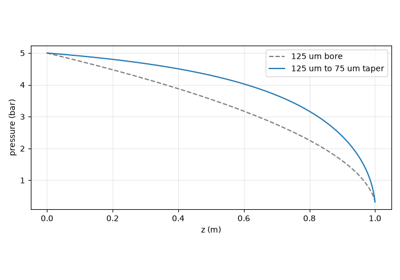
Gas flow in a hollow fibre: tapers, choked ends and the flow regime
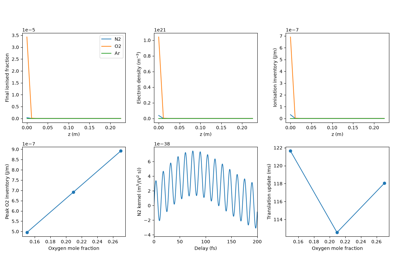
Separate nitrogen and oxygen ionisation in an air-filled capillary
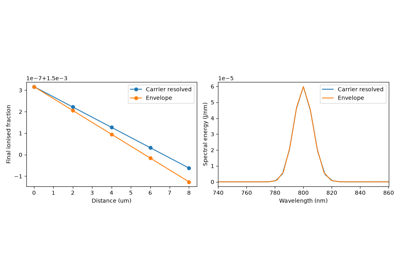
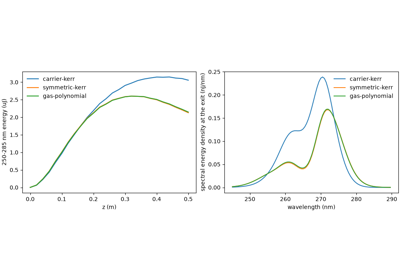
Compare a carrier-resolved pulse with envelope plasma
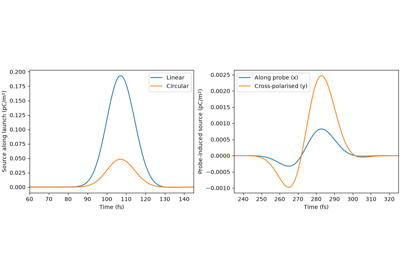
Follow vector Raman coherence with a delayed probe
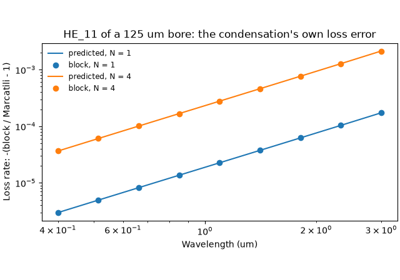
The coherent wall of a capillary, against the incoherent one
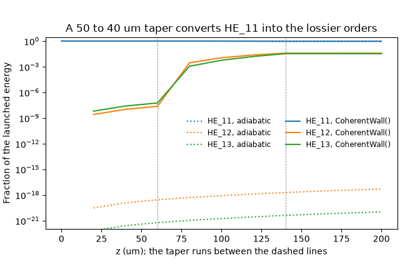
Mode conversion and loss in a taper with a coherent wall
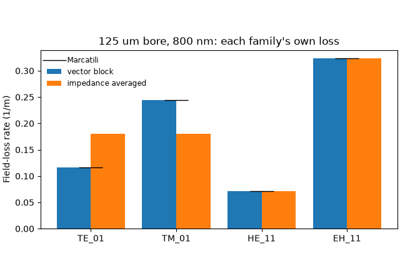
The vector wall: two impedances, two families, one conversion